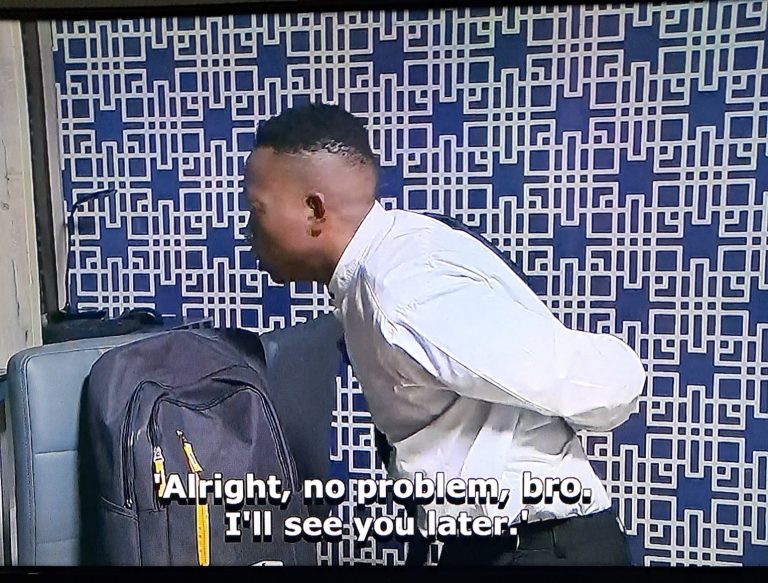
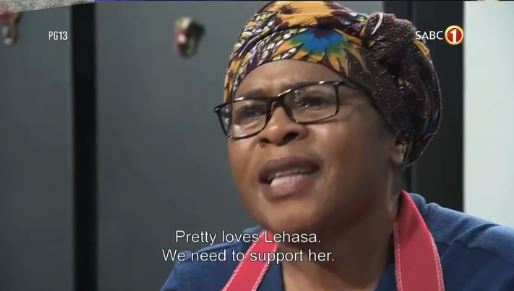
Lewatle sincerely apologised to Mosebjadi on #SkeemSaam for feeling jealous about her recent trip to Cape Town. She acknowledged that her feelings comes from insecurity and admitted that she should have been happy for Mosebjadi’s exciting experience instead of letting jealousy get the better of her. Lewatle expressed her genuine remorse and promised to support her friend moving forward. This heartfelt apology helped to strengthen their friendship, showing maturity and the importance of understanding and forgiveness between close friends. Thank you, #SkeemSaam 📺👇
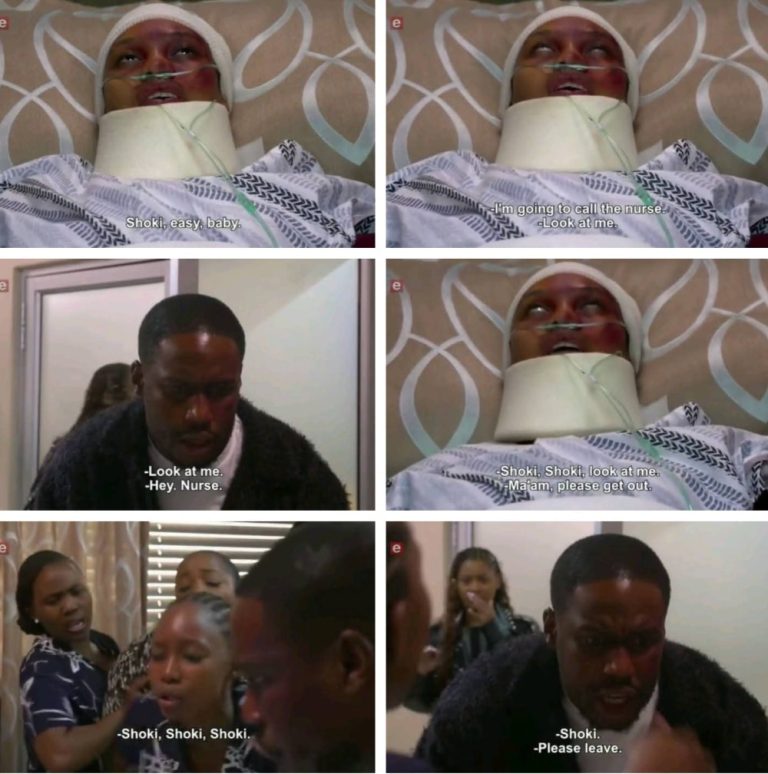
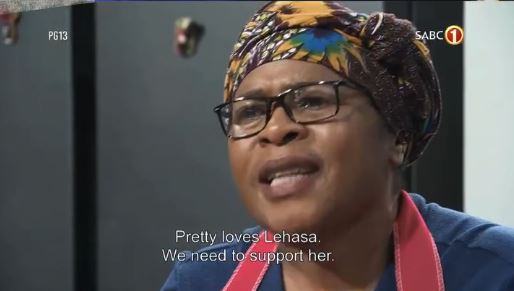
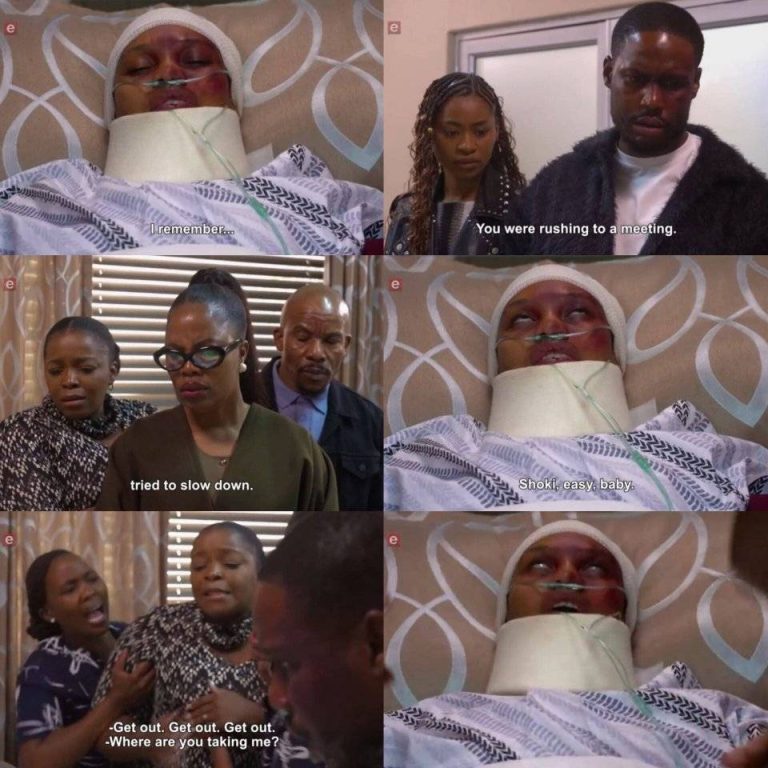
In the recent episode of #SkeemSaam, tensions rose when Clement made Pretty taste Rachel’s sweets, which are actually drugs, exposing the truth and making Lehasa look like a liar. This bold move not only confirmed suspicions about the sweets but also intensified the ongoing drama among the characters. The storyline is heating up, with alliances and deceit becoming more complicated than ever, leaving viewers eagerly anticipating what will happen next.
South African music star Makhadzi inspired millions by sharing a heartfelt update on her recovery after a near-fatal accident on 31 December 2025. In a moving social media post, she was seen attempting to walk with walking sticks for the first time, a moment that touched fans deeply. Her resilience has led many to call her a “miracle woman” and a “baby of God,” as her steady progress continues to inspire the nation.
A Near-Death Experience That Shook Fans
The Accident That Changed Everything
The accident, which occurred on New Year’s Eve, left Makhadzi with serious injuries and sparked widespread concern across South Africa and beyond. For days, fans feared the worst as details slowly emerged about the severity of the incident.
At the time, the singer went quiet, later explaining that she was fighting for her life and undergoing intense medical care. The festive season turned into a season of prayer, with supporters flooding social media with messages of hope and encouragement.
“I Didn’t Think I’d Walk Again”
In her recent post, Makhadzi opened up about how close she came to losing everything — including her ability to walk.
Seeing her take those first steps, even with the help of walking sticks, symbolised more than physical healing. It marked victory over fear, pain, and uncertainty.
First Steps, New Strength
Learning to Walk Again
The images and videos show Makhadzi carefully placing one foot in front of the other, visibly determined despite the difficulty. Though she still relies on walking sticks, her progress has been described by fans as nothing short of a miracle.
Supporters applauded her courage, with many saying the moment felt like watching someone being reborn.
Social Media Reactions
“God is not done with you.”
“This is a testimony.”
“You are truly a miracle woman.”
Turning Pain Into Music
Recording a Song During Recovery
In an incredible show of resilience, Makhadzi revealed that she recorded a new song just yesterday, even while still recovering. The song is titled:
“I Can Walk, I Can Talk”
The title alone has already touched hearts, as it reflects her gratitude for life and her determination to keep moving forward despite the trauma she endured.
Music as Healing
For Makhadzi, music has always been more than entertainment — it’s therapy, prayer, and testimony. Recording a song at such a vulnerable stage proves her unbreakable spirit and deep love for her craft.
Many fans believe the song will become one of her most emotional and meaningful releases yet, serving as encouragement to anyone facing physical or emotional battles.
Faith, Gratitude, and a Second Chance at Life
“Baby of God” — Fans Speak
Across social platforms, followers have referred to Makhadzi as a “baby of God”, pointing to how narrowly she escaped death and how quickly she is regaining strength.
She has consistently acknowledged God, doctors, and fans for standing by her during her darkest moments.
A Message of Hope
Her journey is now being seen as:
A testimony of survival
A reminder of the power of faith
Proof that setbacks don’t mean the end
What Lies Ahead for Makhadzi
One Step at a Time
While she still has a long road to full recovery, Makhadzi’s latest update shows that hope is alive. Each step she takes is not just for herself, but for millions who draw strength from her story.
As she continues to heal, fans are eagerly waiting to hear “I Can Walk, I Can Talk” — a song born from pain, faith, and victory.
Makhadzi is not just walking again — she’s walking in purpose.
Evelyn was absolutely blown away by Mosebjadi’s incredible piano skills on #SkeemSaam. She had no idea that Mosebjadi was that talented, and watching her play with such passion and precision truly surprised her.
This unexpected display of musicianship added a deeper dimension to her character, making the scenes even more captivating. Thank you, Sesi, for showcasing such impressive talent on #SkeemSaam and giving viewers a fresh reason to admire Mosebjadi. #SkeemSaam 💍❤️
THE ART OF WRITING AND MAKING FILMS / COURSES FOR WRITERS / 2025 FILM RELEASES / 2026
“The American Dream is such a powerful story, and after the war, dreaming big became an international sensation alongside this new idea that individuals make history and play a crucial role in shaping and reshaping the world,” says writer-director Josh Safdie of Marty Supreme. “Marty represents the confidence, cockiness, and ambition that America expressed in the postwar years.”
“Sharing a brutal prison existence allows the two characters in this film to strip away all the markers and classifications society imposes on them – class, ideology, sexuality, gender – and see each other purely as individuals. It’s still a revolutionary idea, and I’m proud that people are responding to it,” says writer-director Bill Condon of Kiss Of The Spider Woman
“We want to push the boundaries of storytelling and captivate audiences,” says James Cameron of Avatar: The Way Of The Water. “The broader audience only cares about a story, the characters, and how the film makes them feel. I keep that in mind first and foremost every single day.”
“We root for underdogs because their struggle is our song. We need to see real people triumph over adversity — not just superheroes in capes. I need to believe, with all the problems we face in this country, that the American Dream is still possible,” says writer director Craig Brewer of Song Sung Blue
“I think, for all of us, there’s a gap between who we are deep down and who we present ourselves to be, and this varies in terms of all the different roles we play in our lives. And as we get older and gain more experience, and maybe wisdom, how do we re-meet and redefine the person that we are?” says writer-director Noah Baumbach Jay Kelly, co-writing the screenplay with Emily Mortimer (in her screenwriting debut).
“Greg and I have been working together now for about 15 years, and we’ve written many scripts together. Train Dreams was unique because we had never adapted a work of fiction before. We try to bring a deep level of research to what we do, and this film was no different, but it’s hard to research something that’s about a time gone by, and also based on a work of fiction,” says Clint Bentley, who co-wrote the film with Greg Kwedar
“My dad really started to inhabit the characters, especially Ray, speaking as him during the writing process. That was when I realised this was going to be its own kind of special beast. Working with him taught me so much as a writer and storyteller; by the time we got to set, we had a shorthand for everything,” says screenwriter Ronan Day-Lewis, who co-wrote Anemone with Daniel Day-Lewis, inspired by the lingering scars of the Troubles in Northern Ireland.
“Blue Moon is a chamber piece on the brutal architecture of artistic mourning… it deals with a trauma that is, in a way, two‑fold: not just a business split, but an artistic divorce between two men who defined an era together,” says writer-director Richard Linklater
“I’ve dreamed all my life of making rom coms in the vein of Lubitsch, Wilder, and Sturges,” says director David Freyne. “I adore that era when people believed rom coms could say everything, could be the deepest films, no matter how feathery their touch. And here was my chance. Eternity might be set in the afterlife, but what mattered to me is the characters are caught up in conflicts that feel very human and very true to our experiences.”
“My goal in expanding on Mason Deaver’s novel into a cinematic universe was to examine how acts of love, compassion, and service towards family—chosen and blood—could either endanger a child or embolden them to flourish, to offer audiences a contained and simple character study on becoming. It was important for me to tell this story authentically and not fall into the trap of dramatising Ben’s gender or coming out too much. Viewing anybody solely through the lens of their gender or sexuality diminishes their vast and complex humanity,” says writer-director Tommy Dorfman of I Wish You The Best
Guillermo del Toro’s Frankenstein isinspired by Mary Shelley’s seminal 1818 novel of the same name. “I’ve lived with Mary Shelley’s creation all my life,” says del Toro. “For me, it’s the Bible. But I wanted to make it my own, to sing it back in a different key with a different emotion. Mary Shelley’s masterpiece is rife with questions that burn brightly in my soul: existential, tender, savage, doomed questions that only burn in a young mind and only adults and institutions believe they can answer,” del Toro explains. “For me, only monsters hold the secrets I long for.”
“Once I read the script, I jumped in. Regretting You is a coming-of-age story about relationships between parents and children growing up, like my previous films Stuck in Love and The Fault in Our Stars. I have always been, and always will be, attracted to movies about families, specifically kids discovering that their parents are fallible. That’s an important moment in anybody’s life,” says director Josh Boone.
“In the world that we live in now, people live in certain bubbles that have been enhanced by technology,” visionary director Yorgos Lanthimos says. “Having certain ideas about people is reinforced depending on which bubble you live in, creating this big chasm between people. I wanted to challenge the viewer about the things that we’re very certain about, the judgment calls that you make about certain kinds of people. Bugonia is a very interesting reflection of our society and the conflict in our contemporary world.”
“Beginning production on Springsteen: Deliver Me from Nowhere is an incredibly humbling and thrilling journey,” says writer-director Scott Cooper. “Bruce Springsteen’s ‘Nebraska’ has profoundly shaped my artistic vision. The album’s raw, unvarnished portrayal of life’s trials and resilience resonates deeply with me. Our film aims to capture that same spirit, bringing Warren Zanes’ compelling narrative of Bruce’s life to the screen with authenticity and hope, honouring Bruce’s legacy in a transformative cinematic experience.”
“From 1985 to 1994, my mother worked for the British Board of Film Classification. Each day, she would watch a film to determine its appropriate level of censorship and then, at night, for my bedtime story, recite the plot to the movie she had seen that day. I would fall asleep, visualising these narratives, dreaming about the T-1000 or Nakatomi Plaza and then later I would get to see these characters and locations realised on celluloid. This practice spawned an inevitable life-long obsession with cinema,” says director Max Minghella, whose film Shell is a love letter to those bedtime stories.
Scott Derrickson and C. Robert Cargill
“With Black Phone 2, we were able to keep building on characters rooted in our own childhoods and what it was like growing up in the ’70s and ‘80s,” says writer-producer C. Robert Cargill. “We have been through a lot together and are as close personally as we are professionally. What keeps it creatively fulfilling is the material, of course. It is always about telling a good story. That drives everything,” says writer-producer-director Scott Derrickson.
There was something really complicated about Mark Kerr that I wanted to explore,” says writer-director / editor Benny Safdie of The Smashing Game. “And there was something about Dwayne, too. He has this image of himself out in the public, but as he spoke to me about Mark, and as he talked about this movie, oh my God! I realised there was a whole other side to him that we could explore together.”
“I believe that the strongest case of the theatrical experience can be made with horror films. We all seek the therapeutic experience of facing our worst, darkest, most secret terrors in the safe environment of a movie theatre,” says director Renny Harlin of The Strangers – Chapter 2. “We can scream, cry, hide our eyes, or even laugh at the uncontrollable and life-threatening scenes that unfold in front of us. In a movie theatre, it is all a communal experience.”
“Our past absolutely defines everything we do in the present. We can’t help it. We’re made by the events of our past, so there’s no escaping it,” says writer-director Andrew Haig of All Of Us Strangers. “I am fascinated by that person who is trying to live authentically, but they are on the outside of society—so how do they manage in the world around them?”
“I started working on One Battle After Another 20 years ago to write an action car-chase movie, and I returned to it every two or three years. At the same time, this was in the early 2000s, I had the notion to adapt Thomas Pynchon’s Vineland, a book about the 1960s, which he wrote in the `80s. So, I was trying to decide what the story meant another 20 years later. So really for 20 years I had been pulling on all these different threads. Vineland was going to be hard to adapt. Instead, I stole the parts that really resonated with me and started putting all these ideas together. With his blessing,” says writer-director-producer Paul Thomas Anderson.
“As a kid growing up in the 80s and 90s, the buddy cop genre and road movies were more popular than ever before, and they had a major influence on me when it came to the kind of films I wanted to make. Like a lot of people, I was charmed by the idea of taking two individuals from different walks of life and forcing them together. As soon as my agents sent me the script of London Calling, I was all in. It took the best elements of the buddy genre, stuffed it into a road movie, and encompassed themes of family, aging, and identity,” says director Allan Ungar
“Over the course of my career, I’ve tried to bounce around different genres and stories, but they always seem to retain one common denominator – characters that are simply trying their best to do the right thing. I find there to be such a beautiful dignity to it. I felt like I had an idea of what I was going to be getting from a movie called The Threesome and then was given something much more sophisticated, tender and nuanced,” says director Chad Hartigan.
“I’m one of those guys who usually loves the book and hates the movie—so with The Long Walk we had to find a way to be really, really loyal to the DNA of the story,” says screenwriter JT Mollner. “What makes it special is this hint of nihilism, but then a tiny bit of hope—this weird amalgamation of things that Stephen King was obviously feeling as a young man. This disillusionment with America, and him creating this sort of hyperbolic version of it.”
“The real challenge is in structure,” says writer Julian Fellowes about writing Downton Abbey. “When you have a series, you don’t have to give every character a story every week. You can have different emphases. Whereas in a film, everyone has to have their crack at the whip. Everyone has to have an active part in the story.”
“In my movies, if there’s a real case, I’m going to do a deep dive into it, and meet and talk to as many people involved as I can,” says Director / Executive Producer Michael Chaves of The Conjuring: Last Rites. “There’s also obviously research into the period—in The Nun II, I went through all kinds of great 1950s photography that we leaned into as we were making the film. So, we looked at the period, but I also did a lot of Zoom interviews with the four Smurl sisters. Talking to them about their experience was really powerful.”
“Together is a film about the potential horror of sharing a life with someone; the lingering anxieties of commitment writ large. It’s about co-dependency, monogamy, romances and resentments — and that at a certain point, can we truly tell where one life ends and our other half’s begins? What draws me into a project is finding a one-off, hooky premise, and squeezing that premise for all its juice. Despite the personally resonant and (hopefully) realistically observed characters at the centre of this story, I am so proud how we escalate the horror into things I’ve never seen before on screen, ” says writer-director Michael Shanks.
For Charlie Huston, Caught Stealing isn’t just a darkly humorous heist story— it’s a project that’s near and dear to their heart. “I wrote this book way back in 1998, the year the story is set in,” they say. “There’s a ton of my own lived experience in the story’s main character. When Darren Aronofsky reached out to me 18 years ago to say that he was interested in the book, it was super exciting. I loved the idea of Darren taking his visual sensibility and the dynamism of his storytelling and applying it to this story.”
Tony McNamara believes one of the best things about being a screenwriter is seeing your words brought to life by the people playing the characters you have spent so long imagining in your head. When it came to The Roses, that first day on set was perhaps one of the best. “We wanted to make a very smart adult comedy that goes dark. And I feel like there haven’t been that many of those for a while,” says McNamara. “And we wanted to make a really good comedy about marriage that also had a good heart about how hard that is. We wanted to make something that people could relate to. I know we all did.”
“I’ve always liked Superman. I think as a kid I was really attracted to the Superman family comics, with Superman and Supergirl and Krypto and the whole gang. It was at a time when I was starting to become more aware of how important films were to me in my life, and that was different from how important films were to other people in their lives,” says writer/director/producer James Gunn.
“When I’m writing, I have a rule for myself—I don’t want to know what’s going to happen at all. I always just start. So, I sat down to write what would become this movie, and the first thing I type is this little girl telling a story and these kids who go running out of the house. And I’m thinking as I’m writing, “This is cool. I hope I figure this out.” And I didn’t really figure it out until it was time in the script to answer that question. Basically, I’m writing on a tightrope, hoping that it is revealed to me. Luckily, in this case, it was. But I was just writing to get this feeling out, and it ended up turning into Weapons. I think when I wrote Barbarian, it was kind of a similar thing. I sat down and started writing for the fun of it, without any idea of what it was going to be,” says writer-director Zach Cregger
Filmmaker & Writer Vault
Films listed alphabetically. Click on title to read more about how the films were written and made.
5TH WAVE / 10 CLOVERFIELD LANE / 10 LIVES / 13 HOURS: THE SECRET SOLDIERS OF BENGHAZI / 28 YEARS LATER / THE 33 / AI FILMS
A
A REAL PAIN / A SCAM CALLED LOVE / A WORKING MAN / ABIGAIL / THE ACCOUNTANT 2 /AFTER EVERYTHING / ALICE THROUGH THE LOOKING GLASS / ALIEN: ROMULUS / ALL OF US STRANGERS / ALVIN AND THE CHIPMUNKS: THE ROAD TRIP / AMELIE / ANATOMY OF A FALL / ANOMALISA / ANORA / ANYONE BUT YOU / ARGYLLE / ARTHUR AND THE KING / ARTHUR’S WHISKY / THE ARTIST / ASPHALT CITY
B
BABYGIRL / BACK TO BLACK / BAD GUYS / BAD GUYS 2 / BARBARIAN / BASTILLE DAY / BATMAN VS SUPERMAN: DAWN OF JUSTICE / BEAUTIFUL WEDDING / BEEKEEPER / BEETLEJUICE, BEETLEJUICE / BEFORE I WAKE BEN HUR (2016) / BETTER MAN / BFG / BIG SHORT / BIKERIDERS / BLACK BAG / BLINK TWICE / BORDERLANDS / THE BOSS / BOY / BOY KILLS WORLD / BRAVE THE DARK / BRIDGE OF SPIES / BRIDGET JONES’S BABY / BRIDGET JONES: MAD ABOUT THE BOY / / BRING HER BACK / BROOKLYN / BROS / THE BRUTALIST /
C
CAPTAIN AMERICA: BRAVE NEW WORLD / CAPTAIN AMERICA: CIVIL WAR / CAPTAIN FANTASTIC / CAROL / CAT PERSON / CATCH HELL / CAUGHT STEALING / CELLAR DOOR / CENTRAL INTELLIGENCE / CHALLENGERS / CHOICE / CINEMA PARADISO / CIVIL WAR / COBALT BLUE / COLOR PURPLE / COMPANION / COMPLETE UNKNOWN / CONCLAVE / CONCUSSION / CONJURING 2 / CONJURING: LAST RITES / CONJURING: THE DEVIL MADE ME DO IT / COUP DE CHANCE / THE CREATOR / CREED / CREED II / CREED III / CRIMINAL / CRIMSON PEAK /THE CROW / CURSE OF THE BLACK WIDOW /
D
DADDY’S HOME / DANGEROUS ANIMALS / DANISH GIRL / DEADPOOL / DEADPOOL 2 / DEADPOOL & WOLWERINE / DEATH ON THE NILE / DEMOLITION / DEN OF THIEVES 2: PANTERA / DESPICABLE ME 4 / DIRTY GRANDPA / THE DISCOVERY OF HEAVEN / DOG MAN /DON’T LET’S GO TO THE DOGS TONIGHT / DOWNTON ABBEY / DREAM SCENARIO / THE DRESSMAKER / DROP /DUNE: PART TWO
E
EDDIE THE EAGLE / EDDINGTON / ELVIS & NIXON / THE END WE START FROM / ELEKTRA / ELEVATION / ELIO / EMILIA PEREZ / EQUALS / EVERYBODY WANTS SOME!! / THE EXORCISM / EZRA
F
F1 / FALL GUY / FAMILY AFFAIR / FANTASTIC FOUR: FIRST STEPS / FERRARI / FIFTY SHADES OF BLACK / FINAL DESTINATION: BLOODLINES / FINDING DORY / FINEST HOURS / FIRST OMEN / FLIGHT RISK / FLOW / FLY ME TO THE MOON / FOREST / FOUR LETTERS OF LOVE /FREEHELD / FREE STATE OF JONES / FURIOSA: A MAD MAX SAGA
G
THE GARFIELD MOVIE / GHOSTBUSTERS: FROZEN EMPIRE / THE GIFT / GIRL YOU KNOW IT’S TRUE / THE GALLOWS / GHOSTBUSTERS (2016) / GLADIATOR II / GODS OF EGYPT / GODZILLA X KONG: THE NEW EMPIRE / THE GOOD DINOSAUR / GOOD GRIEF / GOODRICH / GRANDMA / THE GREAT LILLIAN HALL / GRIMSBY
H
HAIL, CAESAR! / HAPPINESS IS A FOUR LETTER WORD / HARDCORE HENRY / HATEFUL EIGHT / HAUNTING IN VENICEHEADSPACE / HEIDI / HELLO, MY NAME IS DORIS / HERE / HE NAMED ME MALALA / HERETIC / HIDDEN LIFE / HIGH STRUNG / HIT MAN / HOLDOVERS / HOLOGRAM FOR THE KING /HORIZON: AN AMERICAN SAGA/HOUNDS OF WAR / HOW TO BE SINGLE / HOW TO TRAIN YOUR DRAGON / HUNGER GAMES / HUNTSMAN: WINTER’S WAR / HURRY UP TOMORROW
I
ICE AGE: COLLISION / THE IDOL / I KNOW WHAT YOU DID LAST SUMMER (2025) / IMAGINARY / IMAGINARY FRIENDS / INDEPENDENCE DAY: RESURGENCE / INFILTRATOR /INHERITANCE / INSIDE OUT 2 / IN THE HEART OF THE SEA / I SAW THE LIGHT / INVISIBLE BOYS / IT ENDS WITH US
J
JANE AUSTEN AND A ZOMBIE APOCALYPSE / JANE GOT A GUN / JASON BOURNE / JOKER / JOKER: FOLIE À DEUX / JOIKA / JOY / JULIET & ROMEO / JUNGLE BOOK / JURASSIC PARK: REBIRTH
K
KEANU / THE KEEPING ROOM / THE KILLER / KILLERS OF THE FLOWER MOON / KINGDOM OF THE PLANET OF THE APES/ KNIGHT OF CUPS / KNOCK AT THE CABIN / KRAVEN THE HUNTER / KUBO AND THE TWO STRINGS / KUNG FU PANDA 4
L
THE LADY IN THE VAN / LAND OF BAD / LAST BREATH / THE LAST DUEL / THE LAST WITCH HUNTER / LEAVE NO TRACE / LEAVE THE WORLD BEHIND / LEE / LEGEND / LEGEND OF TARZAN / THE LIFE OF CHUCK / LIGHTS OUT / LILIES NOT FOR ME / LION / THE LION KING / THE LITTLE PRINCE / THE LITTLE THINGS / THE LOFT / LONDON HAS FALLEN / LONESOME / LONGLEGS / LONG WALK / THE LOST LANDS / LOVE HURTS/ LOVE THE COOPERS
M
MACBETH / MADAME WEB / MAGGIE / MAGPIE /MANCHESTER BY THE SEA / THE MAN WHO KNEW INFINITY / MARIA /MATERIALISTS /MAY DECEMBER /MEAN GIRLS / ME BEFORE YOU / MEDDLER / M3GAN 2.0. / MICKEY 17 / MIKE AND DAVE NEED WEDDING DATES /MILES AHEAD / MILLER’S GIRL / THE MIRACLE CLUB / MIRACLES FROM HEAVEN / MISSION IMPOSSIBLE: THE FINAL RECKONING / MISS YOU ALREADY / MOANA / MOANA 2 / THE MONKEY / MONKEY MAN / MORGAN / MR. RIGHT / MUFASA: THE LION KING / MURDER ON THE ORIENT EXPRESS / MY BIG FAT GREEK WEDDING2 / MY BIG FAT GREEK WEDDING 3 /
N
NAKED GUN / NAPOLEON / NERVE / NETWORK / NEVER LET GO / NEXT GOAL WINS / NICE GUYS / THE NIGHT BEFORE / NIGHTMARE ALLEY / NIGHT OF THE ZOOPOCALYPSE / NOSFERATU / NOVOCAINE / NOW YOU SEE ME 2 / NYAD
O
ON SWIFT HORSES / ONE FLEW OVER THE CUCKOO’S NEST / ONE LIFE /ONE OF THEM DAYS / ONE TRUE LOVES / OPPENHEIMER/ ORDINARY ANGELS / OUR KIND OF TRAITOR
P
PADDINGTON IN PERU / THE PAIN HUSTLERS / PANDA BEAR IN AFRICA / PARALLEL MOTHERS/ PARIS, TEXAS / PAST LIVES / PAWN SACRIFICE / THE PEANUT MOVIE /PELE / THE PENGUIN LESSONS / PERFECT DAY / PETE’S DRAGON / THE PHOENICIAN SCHEME / PINOCCHIO / PLEASE STAND BY / POINT BREAK /POOR THINGS/PRESENCE / THE PROGRAM
Q
QUEEN & SLIM / QUEER / QUIET PLACE: DAY ONE
R
RACE / REBEL MOON / RED ONE / REGRESSION / REMEMBER / REPTILE/ THE REVENANT / RISEN / ROBERTO DEVEREUX / THE ROAD WITHIN / ROCK THE KASBAH / ROOM / THE ROSES / RULE BREAKERS / RUNS IN THE FAMILY
S
THE SALT PATH / SAUSAGE PARTY / SAW X/ SCOUTS VS ZOMBIES / / SEPTEMBER 5 /SHARP CORNER / SHOT CALLER / THE SILENT HOUR / SILENT NIGHT / SING STREET / SISTERS / SLEEPING DOGS / SMILE / SMILE 2 / THE SMURFS / THE SNOW QUEEN / SNOW WHITE / SOLACE / SOCIETY OF THE SNOW / SPEAK NO EVIL / SPECTRE / SPOTLIGHT / STAR TREK BEYOND / STAR WARS: THE FORCE AWAKENS / STEVE JOBS / THE STRANGERS / STRAW / SUFFRAGETTE / SUICIDE SQUAD / SULLY / SUNSET BOULEVARD / SUPERMAN
T
TALK TO ME / TAROT / TESTAMENT OF YOUTH /TEENAGE MUTANT NINJA TURTLES: OUT OF THE SHADOWS / THANKSGIVING / TOGETHER / TRANSFORMERS ONE / TRAP / TREASURE / TRIPPLE 9 / TRUMBO /TRUTH / TWISTERS
U
THE UNBREAKABLE BOY /UNTIL DAWN
V
VENOM / VENOM: LET THERE BE CARNAGE / VENOM THE LAST DANCE / VICTOR FRANKENSTEIN
W
THE WALK / WARCRAFT / WARFARE / WATCHERS / WEAPONS / WEEKEND IN TAPEI / WE LIVE IN TIME / WEREWOLVES /WHERE TO INVADE NEXT / WHISKEY TANGO FOXTROT / WHITE BIRD: A WONDER STORY / / WICKED / / WIDOW CLICQUOT / THE WILD ROBOT / WOLF MAN / WOLF TOTEM / WOMAN OF THE HOUR / THE WONDERFUL STORY OF HENRY SUGAR / WONKA / WOODLAWN
X
X-MEN: APOCALYPSE / X-MEN: DARK PHOENIX
Y
THE YOUNG MESSIAH
Z
Z FOR ZACHARIAH / ZONE OF INTEREST / ZOOLANDER 2 / ZOOTROPOLIS
SOUTH AFRICAN FILMS
A KIND OF MADNESS / ‘N MAN SOOS MY PA / ‘N PAWPAW VIR MY DARLING / BOERS AT THE END OF THE WORLD / DIS KOUE KOS SKAT / DON’T LET GO OF THE DOGS TONIGHT / DORA’S PEACE / ENDLESS RIVER / FRANKIE EN FELIPE / FREE STATE / THE JAKES ARE MISSING / MIGNON MOSSIE VAN WYK / MODDER EN BLOED / MRS. RIGHT GUY / NOMA / MY FATHER’S WAR / SAFE BET / DIE SEEMEEU / SINK / SOM VAN TWEE /TROUVOETE / TWEE GRADE VAN MOORD / UITVLUCHT / VERSKIETENDE STER / VIR ALTYD / WONDER BOY FOR PRESIDENT
TV SERIES /STREAMING
ALL THE LIGHT WE CANNOT SEE / BABY REINDEER / BOY SWALLOWS UNIVERSE / CHRISTOBAL BALENCIAGA / THE CROWN / DISCLAIMER / THE GENTLEMEN / GREY’S ANATOMY / HOW TO GET AWAY WITH MURDER / MID-CENTURY MODERN / MONSTERS: THE LYLE AND ERIK MENENDEZ STORY / / RED WHITE & ROYAL BLUE / THE WATERFRONT
At the end of the Second World War, after the defeat of the Axis powers and Adolf Hitler’s suicide, the Allies were faced with answering a difficult question: what to do about the surviving members of the Nazi regime that had been captured in the liberation of Europe.
Led by United States Supreme Court Associate Justice Robert H. Jackson, the Allies set to work establishing a framework for a trial. And into this charged atmosphere stepped Lt. Col. Douglas Kelley, a quietly resolute U.S. Army psychiatrist tasked with a mission that was as novel as it was urgent. Kelley’s assignment was to probe the minds of the captured Nazi hierarchy – men whose decisions had devastated continents and annihilated millions.
“In the prisoners’ dock sit twenty-odd broken men. Reproached by the humiliation of those they have led almost as bitterly as by the desolation of those they have attacked, their personal capacity for evil is forever past. It is hard now to perceive in these miserable men as captives the power by which as Nazi leaders they once dominated much of the world and terrified most of it. Merely as individuals, their fate is of little consequence to the world. What makes this inquest significant is that those prisoners represent sinister influence that will lurk in the world long after their bodies have returned to dust. They are living symbols of racial hatreds, of terrorism and violence, and of the arrogance and cruelty of power.”
For writer and director James Vanderbilt, who learned about Kelley’s work in the pages of an article and a book proposal from author Jack El-Hai that would become the bestselling The Nazi And The Psychiatrist, the psychological and political machinations of Nuremberg became an undeniable fascination. Vanderbilt was captivated by the extraordinary intersection of history and human inquiry – a moment when the fate of the world’s most notorious war criminals depended not only on armies, or laws that had yet to be written, but on the fragile complexities of the mind.
What thrilled him as a filmmaker was the way El-Hai’s book peeled back the legal proceedings to reveal a gripping, intimate battle of wits between Kelley and the men he evaluated, most notably Göring. “Immediately, I thought, Oh, that’s a movie,” says Vanderbilt. “I’d never seen anything like it explored before, and I didn’t even know what the state of psychiatry was during World War II.”
Beyond his fascination with the psychological dimensions of Nuremberg, Vanderbilt was also propelled by a deep, personal sense of generational responsibility – a responsibility shaped by the ever-widening gap between the world of living memory and that of distant history. He reflected on the profound shift that has taken place as the direct witnesses of World War II fade from the collective stage, leaving their stories at risk of slipping into abstraction for new generations. The war, once a vivid reality for so many, now risks becoming little more than a chapter in a school textbook, its moral questions and human drama flattened by the passage of time.
“My grandparents fought in World War II, and I grew up hearing about it as a piece of living history,” he explains. Today, he finds himself grappling with a new challenge: “When I talk to my children about World War II now, it’s like talking to them about the Civil War. It feels so far removed for them, so it felt important to keep the stories of that time alive.”
Douglas Kelley ultimately reached a profoundly unsettling conclusion: the Nazi leaders, including Göring, were not clinical psychopaths or monsters in any medical sense. Rather, they were disturbingly ordinary men – shrewd, ambitious, and fully rational, yet capable of orchestrating unspeakable crimes under the right conditions.
This diagnosis challenged the world’s desperate need for simple answers or comfortable categories of good and evil. Kelley’s assertion that monstrous acts could emerge from ordinary individuals provoked fierce controversy among his contemporaries, many of whom recoiled from the idea that the line between good and evil was so fragile and human.
At Nuremberg, he was soon replaced by the psychologist Gustave Gilbert, who concluded that the Nazi leaders exhibited profound moral and emotional deficits – qualities he regarded as pathological and emblematic of an innate capacity for evil. As the world sought to come to terms with the legacy of Nuremberg, it was Gilbert’s damning psychological portraits that captured public attention and ultimately shaped the prevailing narrative. Gilbert’s perspective resonated with a public eager for clear moral boundaries, and his subsequent writings, particularly his detailed diaries, became touchstones for understanding the Nazi psyche.
Kelley, by contrast, saw his more nuanced conclusions pushed to the margins. As Gilbert’s views took hold and were widely publicized, Kelley’s own reputation and sense of mission seemed to erode. In a chilling echo of the very men he had studied, Kelley ultimately took his own life in 1958 by ingesting cyanide – the same lethal substance Hermann Göring had used within hours of his scheduled execution.
“Nobody escapes from war unaffected,” notes Vanderbilt. “You can’t ignore what happened to Douglas Kelley at the end of his life. It’s such a deliberate thing that it’s hard not to see some kind of symbolism in what happened to him.”
Intent on adapting El-Hai’s book, Vanderbilt soon determined that the narrative should center not on Kelley’s entire biography, but rather on this specific period of his life, and the bigger picture surrounding it. This approach allowed Vanderbilt to incorporate Robert Jackson’s efforts in organizing the trials and provide a more comprehensive view of this singular event in history.
“I made a decision very early on that the story I wanted to tell was the story of what happened to Kelley in Europe,” Vanderbilt explains. “Jack’s book covers his entire life in a beautifully written way, but Robert Jackson’s storyline is not in the book. As I continued my research, the story grew and grew. I knew I needed to keep the guardrails up on what we were going to portray in the film.”
Central to Vanderbilt’s task was a preoccupation with the enduring lessons the events at Nuremberg sought to impart – those that resonated, those that faded, and those now drifting toward oblivion. “Evil isn’t always going to put on a scary uniform,” Vanderbilt says. “It’s not always going to announce itself. It can be insidious. It can be – as Göring was – the nicest guy at the dinner party. That’s a much scarier thought than good guys versus bad guys.”
Through this lens, Vanderbilt set out to illuminate the subtle, chilling ways darkness can infiltrate the ordinary, entertaining audiences with a remarkable true story, while challenging them to confront the discomforting fragility of moral boundaries.
In the immediate aftermath of the Second World War, as the world grapples with the unveiled horrors of the Holocaust, U.S. Army psychiatrist Lt. Col. Douglas Kelley (Rami Malek) is assigned the extraordinary task of assessing the mental state of Hermann Göring (Russell Crowe), the notorious former Reichsmarschall and Hitler’s second in command, along with other high-ranking Nazi officials. As the Allies – led by the unyielding chief U.S. prosecutor, Supreme Court Justice Robert H. Jackson (Michael Shannon) alongside Sgt. Howie Triest (Leo Woodall), David Maxwell-Fyfe (Richard E. Grant), Gustave Gilbert (Colin Hanks), Col. John Amen (Mark O’Brien) and Burton C. Andrus (John Slattery) – navigate the monumental task of creating an unprecedented international tribunal to ensure the Nazi regime answers for its atrocities, Kelley gets to know his ‘patients’. But he soon finds himself locked in a psychological duel with Göring, whose charisma and cunning reveal a sobering truth: that ordinary men can commit extraordinary evil.
The Journey To Screen
“I often get asked what the hardest script I ever wrote was, and it’s usually the one I’m currently working on,” quips Vanderbilt. “But I will say Nuremberg was particularly challenging, because the story kept growing.”
The story of Douglas Kelley had first been brought to him by producer Bradley J. Fischer. While producing the Martin Scorsese film Shutter Island Fischer stumbled onto El-Hai’s book The Lobotomist, which he went on to option and set up as a series at HBO. So, when El-Hai finished writing his new work The Nazi And The Psychiatrist for Scientific American magazine, Fischer was one of the first producers with whom he shared it, along with his plans to expand it into a book.
“Jack has an extraordinary knack for finding these old tales that have been lost to the pockets of history,” says Fischer, who had particularly responded to the cat-and-mouse game played by Kelley and Goring. “There was this incredible sense of manipulation that occurred between them. Kelley was starstruck by this guy, and Göring latched onto that for his own benefit. There was great tension in the story between them, and a lot of fascinating, terrifying levels to unpack. To find that kind of drama enshrined within a relatively obscure chapter of the history of WWII – between the capture of what remained of the Nazi High Command and their trial by the Allies at Nuremberg – was a profoundly rare opportunity to me, as a film producer.”
Vanderbilt, known to his collaborators as Jamie, immediately saw the same potential. Sparked to the possibility of bringing this lost story to the screen, he plunged into years of rigorous research on Kelley and the trials, immersing himself in archives, court transcripts, memoirs, and the entwined lives of the people at the heart of Nuremberg.
As he worked to refine the screenplay, it became clear to him that the complexity of these events could not be captured by focusing solely on the psychological chess match between Kelley and Göring. Vanderbilt felt compelled to broaden the narrative’s scope and weave in other pivotal figures whose actions and perspectives shaped the course of history. Among them, chief prosecutor Robert Jackson, whose impassioned drive established the very framework of the trials, and his British counterpart David Maxwell-Fyfe; Col. Burton Andrus, the warden tasked with the daunting responsibility of guarding the Nazi defendants; and psychologist Gustave Gilbert, whose own interpretations of evil stood in sharp contrast to Kelley’s. Each of them became essential threads in the tapestry Vanderbilt sought to weave.
“Initially, I thought the film might be about two men in a cell, because just reading Jack’s book, there’s already so much depth in there,” Vanderbilt notes. “But as I read Douglas Kelley’s book, 22 Cells At Nuremberg, and looked at his observations of the men he studied, I started researching the trials themselves, and the scope just kept growing. When I read Robert Jackson’s story, and how he and Kelley intersected, I knew the movie had to include it.”
Vanderbilt was struck by the monumental efforts of Robert Jackson in laying the foundations of the International Military Tribunal, better known as the Nuremberg Trials. He felt it essential that the screenplay not only highlight Jackson’s legal prowess but also chronicle the tireless journey that took him from the corridors of Washington to diplomatic meetings in London and even the halls of the Vatican. By tracing Jackson’s travels and relentless negotiations, Vanderbilt sought to capture the extraordinary international coalition-building required to bring the architects of atrocity to justice – an odyssey as dramatic and consequential as anything that transpired inside the courtroom itself.
It was during his exhaustive research that Vanderbilt also stumbled upon the remarkable story of Sgt. Howie Triest – a young German Jewish émigré who, having fled the Nazis as a boy, returned to Europe in a U.S. Army uniform to serve as an interpreter at the Nuremberg Trials. Vanderbilt was captivated by the tragic arc of Triest’s family: Howie’s escape from Germany, the loss of loved ones to the Holocaust, and his improbable return to the very heart of postwar justice. The weight of Triest’s perspective proved irresistible to Vanderbilt, who recognized that weaving Howie’s singular vantage point into the script would deepen the film’s emotional resonance and illuminate the trials from a profoundly personal lens.
But as Vanderbilt wove together the disparate strands, he found himself confronted by the enormity of synthesizing so many vantage points into a coherent whole. Each narrative thread threatened to pull the film in a different direction, demanding that the structure stretch and contort beyond the boundaries of conventional screenwriting. It became clear that capturing the true magnitude and nuance of the Nuremberg story meant relinquishing the safety of tidy, three-act formulas. Instead, Vanderbilt embraced a messier, more organic approach, accepting that the truth of history, with all its interwoven complexities, could not – and should not – be forced to fit the established rules of cinematic storytelling.
“It’s sort of wonderful and terrifying not to have the traditional, three-act structure,” laughs Vanderbilt. “I suppose I’m attracted to movies that don’t hit every beat the way you’re supposed to, but it is nerve-wracking.”
Fortunately, Vanderbilt is no stranger to such unconventional structures, having worked to adapt Robert Graysmith’s book about the Zodiac killer for David Fincher’s 2007 masterpiece Zodiac. Among its quirks, the fact that the two lead characters don’t meet until the halfway point of the narrative mirrors itself in Nuremberg with Kelley and Jackson’s late first encounter. “Doing Zodiac gave me some confidence that I might know how to build this. Once I determined the movie would be about these three men, and we were going to follow them wherever they might go, that built the structure for me.”
“One of the things Jamie really latched onto, I think in a similar way to ZODIAC, was to look at the procedure of the trials – how the sausage really got made,” notes Fischer, who had produced Fincher’s film. “I credit Jamie with pulling open other history books and getting into Robert Jackson’s story; the onus Jackson took upon himself and his team to pave the way for international law.”
For his part, author Jack El-Hai appreciated Vanderbilt’s talent for finding new angles in Kelley’s story. “The mental adjustment I made when I optioned the book was that it wasn’t my story anymore,” says El-Hai, who visited the film’s set during production and was always on hand as a resource for Vanderbilt and the cast and crew. “I concluded my book is what it is, and that will never change, and that it’s wonderful to have somebody like Jamie, with a creative vision, to tease out other things from this story, and to expand the scope.”
Key in Vanderbilt’s mind was the idea that he wanted to create an accessible retelling of this history. “It was important to me that the movie not overstay its welcome,” he says. “I wanted it not to feel like medicine. I wanted it to be entertaining. It deals with some really serious themes, but a spoonful of sugar helps the medicine go down.”
Says Rami Malek, who would eventually be cast to play Douglas Kelley, “Jamie writes with great structure and rhythm, and he finds that thrilling quality we saw in ZODIAC. There’s also a dry sense of humor that is a thread throughout this entire film, because it’s a story about human beings, and in certain circumstances humans must find their own ways to escape the horrors. The way Jamie threads that needle so finely and elegantly, with characters you can root for in every corner of the film, is extraordinarily unique to him.”
It always starts from the top, says Russell Crowe, who would become the first cast member to sign on. Crowe notes that Vanderbilt’s commitment to the project reflected on every department. “Jamie has been a writer for other people, and he’s seen his ideas shaped by other people. That creates a level of determination within an artist, that when he gets that opportunity to direct, he knows what he wants to create.”
The Psychology Of Evil
At the center of Nuremberg’s narrative lies the riveting dynamic between Lt. Col. Douglas Kelley and Hermann Göring. Their relationship forms the emotional and psychological core of the film, as Kelley seeks to understand the mind of his infamous patient, the charismatic and cunning Göring. Through a series of probing interviews and tense exchanges, the film explores the blurred boundaries between fascination and revulsion, empathy and condemnation. The evolving interplay between Kelley and Göring not only illuminates the complexities of evil but also challenges both men – and the audience – to confront uncomfortable truths about power, responsibility, and the human psyche.
For Russell Crowe, tapping into the humanity and inhumanity of a character like Herman Göring was an irresistible draw, even if he knew it would be an enormous challenge. “For the most part, the things that attract me are the things that terrify me,” he says. “I responded to the script straight away, but in a funny way I was also emotionally exhausted by it. How would you even attempt to play that guy? When that kind of question comes up, that’s usually what I’m attracted to.”
An Eager Psychiatrist
To play alongside Crowe’s Göring as Douglas Kelley, Vanderbilt knew he needed to find an actor who could not only go toe-to-toe with Crowe in their scenes together, but who could capture the nuance of personality that Kelley represents; a man who found himself charmed by the charisma of Hermann Göring, but who ultimately sounded the most cogent alarm about how dangerous these charms could be.
Kelley, says Vanderbilt, was a contradiction himself. “He was a scientist, and he was also an amateur magician who used to volunteer to sit in the backseat of cockpits to help the army test the effects of G-forces on the human body. We’re putting a psychiatrist on screen who is like nothing you’ve ever seen. He’s a daredevil, he’s a bit rash.”
Indeed, beyond his accomplishments as a psychiatrist, Douglas Kelley harbored a lifelong fascination with magic, delighting in the art of illusion and often performing sleight-of-hand tricks for friends and colleagues. This passion for magic was more than a mere hobby; it reflected his curiosity about the mind’s capacity for wonder and deception. Kelley saw parallels between the magician’s craft – misdirection, reading an audience, psychological manipulation – and his own work in psychiatry, where understanding human behavior and uncovering hidden truths were essential. His skills even found their way into his professional life, whether entertaining fellow doctors at conferences or employing psychological insights drawn from magic to better understand those he was tasked with analyzing.
Malek hadn’t just stopped at the script, but had charged ahead through Jack El-Hai’s source material, and summoned up a copy of 22 Cells At Nuremberg, Douglas Kelley’s book about his experiences there, which was not easy to track down having been out of print for decades. “I love history, and if you give me something to read, I’ll always gravitate to nonfiction over fiction,” says Malek. “Reading this script, I felt exactly as I hope audiences will when they come out of the movie, which is a sense of, ‘How did I not know this?’ It was a very unique perspective into one of the most devastatingly dangerous moments in history. It was shocking, and I found it so profoundly well-written and balanced. I thought, How can I be a part of this?”
Writer and director James Vanderbilt
James Vanderbilt is a talented writer, director, and producer whose diverse catalogue of films range from heavy-hitting blockbusters to edge-of-your-seat thrillers. Vanderbilt sold his first screenplay 48 hours before graduating from the University of Southern California. It was promptly not made.
He has written and produced over twenty films, including: David Fincher’s ZODIAC, for which he was nominated for a Writers Guild of America Award for Best Adapted Screenplay; THE AMAZING SPIDER-MAN films; the MURDER MYSTERY films; BASIC; THE RUNDOWN; THE LOSERS; WHITE HOUSE DOWN; THE HOUSE WITH THE CLOCK IN ITS WALLS; Luca Guadagnino’s SUSPIRIA; READY OR NOT; and the upcoming READY OR NOT 2.
In 2019, Vanderbilt co-founded the independent production and financing company Project X Entertainment (PXE), with partners William Sherak and Paul Neinstein. Since its launch, the company has produced: SCREAM (2022) and SCREAM VI, both of which Vanderbilt co-wrote; Michael Bay’s AMBULANCE; Radio Silence’s ABIGAIL; MURDER MYSTERY 2; and FOUNTAIN OF YOUTH. They are currently in production on HEADWATERS for Sony and SCREAM 7, as well as the global smash hit Netflix series THE NIGHT AGENT, created by Shawn Ryan.
Jack El-Hai bestselling The Nazi And The Psychiatrist
Jack El-Hai is the author of THE NAZI AND THE PSYCHIATRIST: HERMAN GÖRING, DR. DOUGLAS M. KELLEY, AND A FATAL MEETING OF THE MINDS AT THE END OF WWII (PublicAffairs Books), which has been adapted into the movie NUREMBERG. He is also an executive producer for the film. Published in nineteen languages, the book won a Minnesota Book Award for general nonfiction.
El-Hai’s writing covers history, science, medicine, and crime. His other nonfiction books include THE LOBOTOMIST: A MAVERICK MEDICAL GENIUS AND HIS TRAGIC QUEST TO RID THE WORLD OF MENTAL ILLNESS (Wiley; adapted into an American Experience/PBS documentary), FACE IN THE MIRROR: A SURGEON, A PATIENT, AND THE REMARKABLE STORY OF THE FIRST FACE TRANSPLANT AT MAYO CLINIC (Mayo Clinic Press), and THE LOST BROTHERS: A FAMILY’S DECADES-LONG SEARCH (University of Minnesota Press; adapted into the LONG LOST podcast).
He has contributed longform narratives and essays to The Atlantic, Smithsonian, GQ, Wired, Scientific American, and many other publications. He also publishes the free monthly Damn History newsletter for writers and readers of popular history. Born in Los Angeles, El-Hai received his Bachelor’s degree from Carleton College in Minnesota and his Master’s of Fine Arts degree (in nonfiction creative writing) from Bennington College in Vermont. He is a past president of the American Society of Journalists and Authors and is a past board chair of the Loft Literary Center. He lives in Minneapolis.
Expanding upon the world created by Danny Boyle and Alex Garland in 28 Years Later – but turning that world on its head – Nia DaCosta directs 28 Years Later: The Bone Temple.
In a continuation of the epic story, Dr. Kelson (Ralph Fiennes) finds himself in a shocking new relationship – with consequences that could change the world as they know it – and Spike’s (Alfie Williams) encounter with Jimmy Crystal (Jack O’Connell) becomes a nightmare he can’t escape. In the world of The Bone Temple, the infected are no longer the greatest threat to survival – the inhumanity of the survivors can be stranger and more terrifying.
28 Years Later: The Bone Temple expands upon the extent of the virus’ devastation
As the infection continues to run rampant, the real threat to humanity emerges – humans themselves. As Nia DaCosta takes the directorial reins from Danny Boyle, she infuses the new story with her own elevated, auteur-driven sense of horror and vision for this dystopian world.
Says Danny Boyle, “Nia was the perfect choice to direct The Bone Temple. Alex Garland and I had long been fans of her reimagining of Candyman and recognised that Nia has serious horror chops – and a genuine love for the original 28 Days Later. She honours what fans love about the franchise while making the new film her own, taking the series into even darker, more intense areas.”
Alex Garland, who created this world with Boyle, again serves as the screenwriter
“28 Years Later was a big story, and it couldn’t be told in one film,” he says.
“What connects the two films is that they’re both bonkers, idiosyncratic, and artistically personal works,” DaCosta notes. “When I initially discussed the new film with Danny and Alex, I told them, ‘I’m going to make it my own. I’m not going to try to make ‘a Danny Boyle movie.’ Because that’s impossible to make. Alex’s script was very different from 28 Years Later, so it lends itself to a different approach. I could really put my imprint on it – to let my freak flag fly – and be visually adventurous and matching that with more classical filmmaking.”
“From the start, Nia told Danny and me that the camera would not move in the way Danny moves the camera, and it would not be edited in the way Danny cuts,” Garland confirms. “That was very impressive to Danny because most people’s instinct would have been to duplicate his style, and Nia didn’t do that. That was impressive and smart. Her film is quite different, and that’s a good thing.”
“We have Jimmy Crystal and his followers and their world, and Kelson and his world,” DaCosta explains. “Spike moves between the two, so it was interesting to have a different filmmaking style for each character.”
DaCosta’s imprint included deepening the emotional journeys of Kelson, Spike, and Jimmy Crystal, while uncovering more about the infected – and the world-changing possibilities of trying to undo the plague.
Kelson And Samson Evolve
“The Bone Temple reminds us that everything seems hopeless,” DaCosta says. “But at the same time, if you’re still alive, you can accomplish something meaningful with your life. For Dr. Ian Kelson, it’s building this monument to death, which inversely, is what gives him the energy to live.”
With three-time Oscar nominee Ralph Fiennes taking on an even larger role, as the complex physician turned Bone Temple creator/builder/curator/caretaker, the film features additional backstory on Kelson and more of his relationship with Samson, the mammoth Alpha he regularly sedates but avoids killing. Their evolving dynamic is a key element of the movie. “We’ve seen Samson do monstrous things,” DaCosta notes, “but Kelson sees a lot more to him.”
Fiennes says Kelson’s relationship with Samson stems from an intense moment from 28 Years Later, when an infected woman gave birth to a baby who was not infected. “The new film explores the theme of innate humanity – is it still alive in the soul, in the heart, and in the mind of an infected person?” he asks. “Are they completely corrupted? Or is there the possibility of something human still there?”
Kelson had created a sense of purpose in building his monument to the dead – The Bone Temple. “But Samson ultimately changes the trajectory of Kelson’s life even more, and in a way that’s beautiful and incredibly important,” hints DaCosta. “Not just for Kelson, but for what it means for the world at large.”
Fiennes details the history between Kelson and the Alpha. “In 28 Years Later, we met this musclebound infected human, Samson, who is violent and dangerous. When encountering Samson, Kelson would blow morphine-tinged darts into him, which would tranquilize Samson.”
That tranquility, says DaCosta, is transformative for the monstrous figure. “The pleasurable experience afforded by the morphine darts attaches Samson to Kelson because Samson realizes that Kelson is giving him peace for these small moments. Kelson begins to understand this and fosters a relationship that grows throughout the film, and Samson begins to transform in ways that are unexpected and exciting.
“The dynamic is fueled by Kelson’s loneliness, as well as his curiosity,” she continues. “It’s almost like one couldn’t exist without the other, and it’s a very potent combination. For Samson, the morphine brings them together in a way that’s initially terrifying – we’ve seen him rip people’s heads off! As the complexity of Samson’s thoughts and cognitive processes becomes apparent, Kelson recognizes this, leading to the development of a relationship between them.”
Adds Fiennes: “Kelson succeeds in slowly getting this infected Alpha to reveal his humanness.”
When we met Samson, in 28 Years Later, he was a force of nature, capable of incredible speeds and feats of horrific strength. He also possessed an unexpected – at least for an infected – intelligence. But courtesy of Kelson’s morphine-tinged darts, Samson, again embodied by Chi Lewis-Parry, undergoes the beginnings of a stunning transformation that could change the world.
For Lewis-Parry, “Samson represents hope. When we met Samson, he was an apex predator committing monstrously violent acts. The mutation of the virus has had a steroidal effect on some of the infected, including Samson, turning him into a kind of super-infected.”
We learn that Samson, even in his most primordial form, is more aware than the other infected, and holds a higher status. “We understand that he is an intelligent creature and not just a mindless, rage-filled infected creature,” Lewis-Parry continues. “So, we tried to put a purpose behind the violence.”
Samson slowly learns that Kelson wants the best for him – that he wants Samson to heal.
DaCosta credits Lewis-Parry with conveying Samson’s physical, emotional, and intellectual transformation. “Chi’s unique temperament helped us all get through building Samson. The character has a huge journey that affects the way he acts, looks and even moves. It was so beautiful watching him and Ralph and their characters’ relationship develop.”
Spike’s Journey Continues
In 28 Years Later, Kelson had made a very different, but equally significant impact on the character of Spike, a young man who had undergone a transformative rite of passage, from a neophyte warrior belonging to a generation that doesn’t know a time before infection, into a bold and creative protector.
In that film, says Garland, “Spike encountered Kelson, who looked and acted strange, but turned out to be compassionate. Later, Spike meets the Jimmies, who are the opposite of compassionate. He must survive in that world with these very dangerous people, who are different from anyone he’s ever known.”
Alfie Williams, who again takes on the role of Spike, enjoyed bringing additional facets of the character to the new story. Williams’s Spike continues as the franchise’s emotional throughline, as the character navigates the ongoing horrors of the infected, the even more sinister menaces of the people left behind, and the brutal choices they make to survive.
“As we saw in 28 Years Later, Spike was basically a normal kid, living in a very abnormal world,” Williams says. “He loved his mum and dad and just wanted them to be a family like they used to be before she got sick. Spike was desperate to find a way to save her but ultimately did the best he could to protect and then remember her.
“Now, everything has changed for Spike,” Williams continues. “He’s more mature, and he’s out in the world on his own.”
Garland confirms that while, “Spike’s story began as a family story, it has now become a story about becoming an adult.”
Adds DaCosta, “Spike has gone through this hero’s journey but soon finds himself being forced to attach himself to this weird group of people that initially save him. Spike realizes they’re absolutely mad and now he’s trapped with this roaming band of psychos. That’s his next journey: he must figure out how to escape and what to do next.”
This next phase of Spike’s adventure kicks off in a terrifying manner, with the young man, whom we had seen meeting Jimmy Crystal and his cult, the Jimmies, at the end of 28 Years Later, now being forced by the Jimmies to engage in a fight to the death – a twisted kind of initiation to earn his spot in the cult. “Spike is terrified, and about to engage in a knife fight to the death with one of the Jimmies, Jimmy Shite,” Williams explains. “It’s obviously a big moment for him. Spike must stay with the Jimmies because he has no other choice. If he tries to leave, they’ll kill him. Spike must do whatever their leader, Jimmy Crystal, tells him to do.”
Lord Of The Apocalypse
Spike’s journey, then, is closely linked to Jimmy Crystal, the deviant head of a cult of young people whose reign of terror across the countryside surpasses even the horrors of the infected. When we met the character, via a flashback, in the previous film, he was a young boy who suffered what would become endless trauma when he watched his father, a parish priest, willingly become infected.
Now, 28 years later, the violent, sadistic, manipulative, and Satan-worshiping cult leader and his followers embrace a twisted post-outbreak ideology. They exploit society’s collapse to spread fear and gain power, introducing a new kind of evil into the world.
Garland notes that Jimmy’s traumatic experience, as filtered through the mind of a youngster, “has led to some weird belief systems and a very skewed moral compass. So, that is the twisted world and worldview that Spike finds himself having to survive.”
“Jimmy has created this sense of purpose and meaning around a fake relationship with the devil, whom Jimmy believes is his father because of the shock he experienced as a child,” says DaCosta. “So, he’s found a way to survive, which includes these other young people, the Jimmies, who buy into his weird anti-religion, anti-Christ beliefs. Moreover, Jimmy is incredibly charismatic, quite funny, and a camp representation of the corruption of innocence. He’s a completely insane, wounded, and broken person who is also incredibly entertaining, funny, and occasionally generous.”
Jack O’Connell returns as Jimmy, following the character’s brief but unforgettable introduction in 28 Years Later.
NIA DACOSTA (Director) is one of the freshest and most in-demand voices in Hollywood having written and directed projects for stage, film and television.
Up next, DaCosta wrote, directed, and produced Hedda, a reimagining of Henrik Ibsen’s famous play “Hedda Gabler”, starring Tessa Thompson as the title character for MGM’s Orion Pictures and Plan B. The film premiered at the Toronto International Film Festival on September 7, 2025, and will be released in theaters on October 23, 2025 and on Prime Video on October 29, 2025.
Currently, DaCosta is in post-production on 28 Years Later: The Bone Temple, starring Cillian Murphy, Ralph Fiennes, and Jack O’Connell among many others. The film is the fourth installment of the 28 Years Later series and will be released in theaters on January 16, 2026.
Most recently, Nia directed and co-wrote the highly anticipated Captain Marvel sequel, The Marvels, making her the first Black woman to direct a Marvel Studios picture and the youngest person to direct a film for the studio. The superhero film, starring Brie Larson, Teyonah Parris, and Iman Vellani, was released in theaters on November 10, 2023.
In 2021, Nia directed and co-wrote the Universal Studios feature film Candyman. Produced by Oscar-winner Jordan Peele’s Monkeypaw Productions, the film is a contemporary spiritual sequel of the 1992 cult horror classic of the same name, dealing with the power—and perils—of storytelling, while highlighting timely issues of gentrification, racial profiling and race-based violence. Candyman, starring Yahya Abdul-Mateen II, Teyonah Parris, and Colman Domingo, was released on August 27, 2021 and debuted at #1 at the box office, receiving overwhelming critical acclaim.
Her debut feature, Little Woods, was developed through the Sundance Institute and starred Tessa Thompson and Lily James. The film dealt with real-world topics including access to health care, poverty and criminal justice through the story of two estranged sisters who must work outside the law to better their lives. It premiered at the 2018 Tribeca Film Festival and was released theatrically by Neon in 2019, earning a 96% score on Rotten Tomatoes
In television, she previously directed two episodes of the third season of the Netflix revival, Top Boy. Nia also worked as a writer for the HBO series Industry with U.K.’s Bad Wolf.
Nia received a BFA in Film and Television from Tisch School of the Arts at NYU and a MA in Writing for Stage and Broadcast Media from the Royal Central School of Speech and Drama in London. She currently resides in London.
ALEX GARLAND’s (Writer, Producer) latest film Warfare, which he co-wrote and directed with Navy SEAL veteran Ray Mendoza, was released April 11, 2025. Garland teamed with A24 on Warfare, as he did on his 2024 film Civil War, starring Kirsten Dunst and Cailee Spaeny.
Garland directed the 2022 horror film Men, the 2018 film Annihilation, and the 2014 film Ex Machina, for which he was nominated for Best Original Screenplay at the Academy Awards, as well as three BAFTAs, including Best Original Screenplay. Garland created, wrote, and directed Devs, an eight-part miniseries for FX starring Nick Offerman, which premiered spring 2020.
Most recently, DANNY BOYLE (Producer) directed 28 YEARS LATER, which was released on June 20th, 2025, reprising his role as director of the original film 28 DAYS LATER. Returning again to the franchise, Boyle’s next project will be 28 YEARS LATER: THE BONE TEMPLE. Prior to 28 YEARS LATER, Boyle directed the films YESTERDAY, STEVE JOBS, 127 HOURS, and SLUMDOG MILLIONAIRE, one of the few films in motion picture history that swept the Oscars, the BAFTAs, the Golden Globes, PGA and DGA for both Best Picture and Best Director.
FROM PAGE TO SCREEN / THE ART AND CRAFT OF WRITING FILMS / SOUTH AFRICAN FILMS / ARCHIVE: 2014 / 2015 /2016 /2017 /2018 / 2019 / 2020 / 2021/ 2022 / 2023 / 2024 / 2025
JANUARY 2026 RELEASES
NOW SHOWING:
Kiss of the Spider Woman / Marty Supreme / Tom and Jerry: Forbidden Compass /
REVIEWS: Kiss Of The Spider Woman
NEW RELEASES:
Rental Family is a comedy-drama directed by Hikari, who co-wrote the script with Stephen Blahut. The film stars Brendan Fraser as a lonely American actor living in Tokyo who starts working for a Japanese rental family service to play stand-in roles in other people’s lives. Along the way, he finds surprising connections and unexpected joys within his new family. In cinemas 9 January
Greenland 2: Migration is an upcoming post-apocalyptic survival thriller directed by Ric Roman Waugh and written by Chris Sparling and Mitchell LaFortune. The sequel to Greenland (2020), the film stars Gerard Butler and Morena Baccarin reprising their roles. Five years after the Clarke interstellar comet decimated most of Earth, the Garrity family must leave the safety of the Greenland bunker and embark on a perilous journey across the wasteland of Europe to find a new home. In cinemas 9 January
16 January
28 Years Later: The Bone Temple is a post-apocalyptic horror directed by Nia DaCosta and written by Alex Garland. Taking place after the events of the previous film, Spike is inducted into Sir Jimmy Crystal’s gang of acrobatic killers in a post-apocalyptic Britain ravaged by the Rage Virus. Meanwhile, Dr. Ian Kelson forms a new relationship with potentially world changing consequences
Nuremberg is a psychological thriller / historical drama written, co-produced, and directed by James Vanderbilt. It is based on the 2013 book The Nazi and the Psychiatrist by Jack El-Hai. In Nuremberg, U.S. Army psychiatrist Douglas Kelley (Rami Malek) seeks to carry out an assignment to investigate the personalities and monitor the mental status of Hermann Göring (Russell Crowe) and other high-ranking Nazis in preparation for and during the Nuremberg trials.
23 January
Mercy is a sci-fi thriller directed by Timur Bekmambetov and written by Marco van Belle. emerges as one of the most anticipated science fiction thrillers of the decade, a film that combines the urgency of courtroom drama with the speculative imagination of near-future dystopia.
Dead Man’s Wire is a historical crime film directed by Gus Van Sant. Inspired by the real-life 1977 Indianapolis hostage crisis involving Tony Kiritsis, the film dramatises one of the most shocking and televised crimes of the era. Its significance lies in how Van Sant transforms a historical crime into a meditation on power, disillusionment, and the fragile line between desperation and justice, situating the film within both the tradition of 1970s American thrillers and contemporary reflections on financial exploitation.
In the animated Charlie The Wonderdog a dog gains superpowers after he is abducted by aliens. Together, they battle an evil cat threatening humanity while the dog becomes a famous superhero.
30 January
Hamnet is a historical drama co-edited and directed by Chloé Zhao, who co-wrote the screenplay with Maggie O’Farrell, based on the 2020 titular novel by O’Farrell. The film follows the relationship between Agnes and William Shakespeare, and the impact of the tragic death of their 11-year-old son Hamnet on their lives, leading to the creation of William’s play Hamlet. It stars Jessie Buckley and Paul Mescal as Agnes and William. It tells the powerful story of love and loss that inspired the creation of Shakespeare’s timeless masterpiece, Hamlet.
Shelter is an action-thriller directed by Ric Roman Waugh from a screenplay by Ward Parry. It stars Jason Statham. In a remote coastal sanctuary, Mason (Statham) rescues a young girl from drowning during a violent storm. But this act of compassion sets off a chain of deadly consequences—forcing him to face a darker past and fight to protect what remains of his life.
Send Help is a black comedy / psychological thriller directed by Sam Raimi and stars Rachel McAdams and Dylan O’Brien as co-workers who become the sole survivors of a plane crash while on a business trip. Stranded on a deserted island, they have to work together to survive, which becomes a battle of wills and wits to make it out alive.
Primate is a horror film directed and co-written by Johannes Roberts. A tropical vacation goes awry when a family’s adopted chimpanzee named Ben suddenly becomes violent due to being bitten by a rabid animal.
Melania, provides an intimate look at one of the most closely watched transitions of power in recent history. It offers exclusive behind-the-scenes access to First Lady Melania Trump during the critical weeks before the 2025 presidential inauguration.
PREVIEW: FEBRUARY 2026
6 February
Is This Thing On? – A comedy-drama about a fractured marriage, rediscovery through stand-up, and the fragile art of co-parenting. Directed by Bradley Cooper, screenplay by Cooper, Will Arnett and Mark Chappell, starring Will Arnett, Laura Dern, Andra Day, and Bradley Cooper.
The Strangers: Chapter 3 is the final instalment in Renny Harlin’s rebooted horror trilogy. Directed by Renny Harlin, screenplay by Alan R. Cohen, Alan Freedland, starring Madelaine Petsch, Gabriel Basso, Ema Horvath, Richard Brake.
Solo Mio is a romantic comedy about a man left at the altar in Rome who embarks on his honeymoon alone, discovering love and renewal across Italy. Written and directed by Paolo Genovese, starring Alessandro Borghi, Jasmine Trinca.
Cold Storage is a comedy-horror thriller where two storage workers and a veteran bioterror agent battle a mutating parasitic fungus that escapes from a sealed military base, threatening humanity’s extinction. Directed by Jonny Campbell, screenplay by David Koepp (based on his novel), starring Georgina Campbell, Joe Keery, Sosie Bacon, Liam Neeson, Vanessa Redgrave, Lesley Manville.
Wildcat is a action‑thriller directed by James Nunn and written by Dominic Burns, starring Kate Beckinsale as an ex–black ops operative forced to reunite her old team for a desperate heist to save her eight‑year‑old daughter.
13 February
Goat is an animated sports comedy about Will, a small goat with big dreams who defies the odds to join the pros in roarball, proving once and for all that “smalls can ball”. Directed by Tyree Dillihay (co-dir. Adam Rosette), screenplay by Aaron Buchsbaum, Teddy Riley.
F*ck Valentine’s Day is a romantic comedy about Gina, born on Valentine’s Day she despises, who schemes to stop her boyfriend’s proposal during a getaway, only to discover she might be with the wrong guy. Directed by Mark Gantt, screenplay by Steve Bencich, starring Virginia Gardner, Marisa Tomei, Skylar Astin, Jake Cannavale, Lil Rel Howery.
Wuthering Heights is a sweeping, modernised period romance where Catherine Earnshaw (Margot Robbie) and Heathcliff (Jacob Elordi) navigate a passionate, destructive love against the haunting backdrop of the Yorkshire moors. Written and directed by Emerald Fennell (adaptation of Emily Brontë’s novel).
Giant Whistle is a horror thriller where misfit teens discover an ancient Aztec death whistle that summons their own future deaths to hunt them down. Directed by Corin Hardy, screenplay by Owen Egerton, starring Dafne Keen, Sophie Nélisse, Sky Yang, Ali Skovbye, Percy Hynes White.
20 February
Ella McCay is a political comedy-drama about an idealistic young lieutenant governor juggling family turmoil and sudden leadership when her mentor joins Obama’s cabinet. Written and directed by James L. Brooks, starring Emma Mackey, Jamie Lee Curtis, Woody Harrelson, Kumail Nanjiani, Albert Brooks, Ayo Edebiri.
Crime 101 is a gritty crime thriller where an elusive jewel thief, a disillusioned insurance broker, and a relentless detective collide in a high-stakes heist along Los Angeles’ 101 freeway. Written and directed by Bart Layton (based on Don Winslow’s novella), starring Chris Hemsworth, Mark Ruffalo, Barry Keoghan, Halle Berry, Monica Barbaro.
Die My Love is a psychological drama about a young mother in rural Montana whose descent into postpartum depression and psychosis unravels her marriage and grip on reality. Directed by Lynne Ramsay, screenplay by Lynne Ramsay, Enda Walsh, Alice Birch (based on Ariana Harwicz novel), starring Jennifer Lawrence, Robert Pattinson, LaKeith Stanfield, Nick Nolte, Sissy Spacek – 20/2
Pretty How Town is a surreal drama weaving love, loss, and identity through a fractured small-town dreamscape.
27 February
Scream 7 is a slasher thriller where Sidney Prescott must confront a new Ghostface targeting her daughter, forcing her to face past horrors to protect her family. Directed by Kevin Williamson, screenplay by Williamson, Guy Busick (story by James Vanderbilt & Busick), starring Neve Campbell, Courteney Cox, Jasmin Savoy Brown, Mason Gooding, Isabel May.
How to Make a Killing is a darkly comic thriller where disowned outcast Becket Redfellow schemes to reclaim his wealthy family’s inheritance—by eliminating every relative in his way. Written and directed by John Patton Ford (story inspired by Kind Hearts and Coronets), starring Glen Powell, Margaret Qualley, Jessica Henwick, Ed Harris, Zach Woods, Topher Grace.
GR 10 D is a dystopian sci-fi thriller where ten students trapped in a digital simulation must outwit their own engineered fears to survive graduation.
Marty Supreme was written and directed by Josh Safdie, co‑written with Ronald Bronstein, and inspired by the real‑life figure Marty Reisman, a flamboyant Jewish‑American table tennis champion of the 1950s. It’s a bold, kinetic portrait of a fast-talking New York City dreamer, hellbent on turning an overlooked sport into his personal springboard to glory.
“Marty is the quintessential dreamer, in that he’s the ultimate romantic and the most relentless optimist,” says writer-director Josh Safdie, “It’s a coming-of-age story, which explores how in youth an uncompromising individuality can be both freeing and restricting. For Marty, his blind faith in his dream leads him in an indirect way to true self-discovery…to real change.”
With his seventh feature film — marking a seventeen-year career that began with his solo directorial debut The Pleasure of Being Robbed, acquired by IFC and premiering in Cannes in 2008 — Safdie brings his signature adrenaline-charged style and emotional heft to this globe-spanning epic. The result, researched and developed over many years, is a fresh, fun, full-throttle thrill-ride journeying from the Lower East Side to London, Paris, Tokyo and the Great Pyramids and back.
“Marty’s commitment to his dream relies on self-belief, but in the end it’s the belief from others that proves to be the most important,” says Safdie. “His entire life is propped on belief. Those who believe with him are along for the ride and those who are not are simply run over. Marty Supreme follows him through this Sisyphean journey to get to that place.”
Set in 1952 New York, the film follows Marty Mauser (Timothée Chalamet), a brash young hustler who works at his uncle’s shoe store while chasing his dream of becoming a table tennis champion. Marty is arrogant, trash‑talking, and endlessly scheming, convinced that ping‑pong is his life’s calling even though few take the sport seriously. His journey takes him from the Lower East Side tenements to the Ritz in London, and finally to a climactic match in Tokyo against Japanese champion Koto Endo. Along the way, Marty entangles himself with wealthy patrons, criminal figures, and complicated romances, including affairs with Rachel Mizler (Odessa A’zion) and retired actress Kay Stone (Gwyneth Paltrow).
Developing the Story
Safdie got hooked on table tennis at a young age, battling against his father and hearing his uncle’s stories about the great misfits of 20th-century New York who gravitated to the game. One afternoon, his wife was sifting through a dollar bin of books at a thrift store when she found a book written by a New York Jewish table tennis prodigy named Marty Reisman. Safdie, busy at the time finishing Uncut Gems, didn’t read it right away— but when he finally did it revealed a world much stranger and more exciting than he’d ever imagined. Soon, he was pressing his uncle for stories about Lawrence’s Table Tennis Club, the legendary hub of New York City’s ping pong scene.
He and his wife (Sara Rossein, Executive Producer and researcher) found themselves deep down the rabbit hole, consuming every story, clip, and scrap of history they could find about the sport and its forgotten characters.
In 1950s NYC, table tennis bred a subculture full of schemers, geniuses, and outcasts — it was a game played in smoky backrooms, penthouse parties, YMCAs, Ivy League dorms, and downtown tenements. It was fast, fierce, and entirely ignored by the mainstream. It was amongst these outsiders, these adult truants, that Safdie and Bronstein found a new outlet for their enduring love of flawed characters and unorthodox world-building. “The people who excelled at table tennis were often people who didn’t fit anywhere else,” says Safdie. “It wasn’t respected, so naturally it attracted weirdos, purists, obsessives. When I read that the sport was filling stadiums in the UK and throughout Europe, I realised that it was entirely plausible for a kid in 1952 to actually believe he could parlay the game into a life of fame and glory.”
A character quickly grew from the research, bursting beyond the boundaries of any real story
Someone guided by blind ambition and rife with contradictions: egotistical and lovable, scrappy and skilled, both rogue and romantic. A kid rebelling against the establishment, who, like everyone around him in the New York City of his era, is hustling to grab his piece of the prize. “We wanted to take the very idea of ambition — the confidence, the hunger, the need to prove yourself on your own terms — and build something bigger,” Safdie says. “Push it to its outer limit.”
Before a single word of dialogue was written, Josh reached out to Timothée, whom he had met and connected with at a party for Good Time in 2017 — just a few months before Call Me By Your Name was released and the young actor’s trajectory was set in motion. Over the years, they stayed in constant touch and developed a friendship rooted in their shared experience as wide-eyed kids from New York City dreaming of making films: “I knew that he was strapped onto a lightning-bolt dead set on becoming the greatest…but I also knew he could choke on a hot dog laughing at the dumbest practical joke. There was a unique brand of seriousness to Timmy that felt perfectly aligned with the wide-eyed blunt dreamer that we had started to create.”
“Josh is the kind of director whose door I’ve been knocking on for seven years now,” says Chalamet. “With him, you can’t overplan it. His movies are really off the cuff. Usually a movie of this size is preplanned, but Josh’s strategy is more preplanning everything until it’s chaos.”
In building the Marty Mauser character, Safdie and Bronstein weren’t interested in myth making. They were after something more honest: what it actually looks like to chase a dream no one else shares. The cost of belief. The risks no one sees. The humiliations endured. The personal cost of failure when one’s entire identity is fused with a pursuit.
“To pursue a dream that society doesn’t respect — doesn’t even pretend to understand — requires a very extreme form of conviction,” says Bronstein. “The ego must evolve into a kind of exoskeleton, to protect itself from being crushed by the weight of collective indifference.”
Safdie and Bronstein were drawn to the idea of using Marty as a vehicle to explore a deeply American ideal: the lone, driven individual pushing forward in the face of history — in this case, the aftermath of the Second World War. Through international competition and his travels abroad, Marty comes face to face with Koto Endo, a Japanese player and would-be national hero (portrayed by Koto Kawaguchi, real-life winner of the Japanese National Deaf Table Tennis Championships). Endo becomes Marty’s near-spiritual rival, and Marty Supreme becomes, in part, a story about the complex interplay between American triumphalism and rugged individualism and Japan’s postwar quest for self-determined survival and renewal.
“The American Dream is such a powerful story, and after the war, dreaming big became an international sensation along side this new idea that individuals make history and play a crucial role in shaping and reshaping the world,” says Safdie. “Marty represents the confidence, cockiness, and ambition that America expressed in the postwar years.”
But the road to Marty’s dreams — like the country he comes from — is paved with self-delusion, and the journey that unfolds is funny, messy, and unpredictable. Marty is a lightning rod of energy, and the movie hums to his rhythm. For all of his chaos, he’s a charmer; you can’t help but root for him and his relentless determination to succeed.
Josh Safdie – Director/Writer/Producer/Editor
Josh Safdie is a filmmaker whose credits include Uncut Gems, Good Time, Heaven Knows What, and Daddy Longlegs. Safdie recently reunited with Sandler for the Netflix comedy special Adam Sandler: Love You.
Ronald Bronstein – Writer/Producer/Editor
Ronald Bronstein is a director, screenwriter, editor and producing partner at Central Pictures. His debut feature, Frownland, antagonised audiences on both sides of the Atlantic, earning a place in the permanent collection of the Museum of Modern Art and the Criterion Collection. After playing the lead role in the Safdie’s debut Daddy Longlegs, he’s gone on to co-write and co-edit all of their features, including Good Time and Uncut Gems.
Kiss of the Spider Woman (2025) is a musical drama written and directed by Bill Condon, inspired by Manuel Puig’s 1976 novel and its subsequent stage and film adaptations. it carries forward a legacy that spans literature, Broadway, and cinema, exploring themes of love, repression, and political resistance in Argentina’s Dirty War era.
REVIEW
In Conversation with Bill Condon
The 2025 film Kiss of the Spider Woman represents a bold attempt to reimagine a story that has already lived several lives across different mediums.
Written and directed by Bill Condon, known for his work on Dreamgirls and Beauty and the Beast, the film adapts the 1992 Broadway musical by Terrence McNally, John Kander, and Fred Ebb, itself based on Manuel Puig’s 1976 novel. Puig’s book was first adapted into a 1985 film directed by Héctor Babenco, which won William Hurt an Academy Award for Best Actor. Condon’s version, however, embraces the musical form, weaving song and spectacle into the intimate, claustrophobic setting of a prison cell in 1980s Argentina.
The film follows Luis Molina (Tonatiuh), a gay window dresser imprisoned for indecency, and Valentín Arregui (Diego Luna), a political dissident jailed for his revolutionary activities. Molina, flamboyant and imaginative, retells the plot of his favorite Hollywood musical starring diva Aurora (Jennifer Lopez), using fantasy as a means of survival and connection. The narrative oscillates between the harsh reality of incarceration and the lush escapism of musical storytelling, creating a duality that underscores the film’s themes: the power of art to resist despair, and the fragile bonds of intimacy forged under oppression.
The performances anchor the film’s emotional weight. Tonatiuh’s portrayal of Molina captures both vulnerability and flamboyance, embodying a character who refuses to surrender to despair. Diego Luna’s Valentín provides a counterpoint of stoic resistance, gradually softened by Molina’s storytelling. Jennifer Lopez, as Aurora, embodies the fantasy figure who bridges the prison’s grim reality with the escapist allure of cinema. Together, the cast underscores the film’s central tension: the collision between repression and imagination, politics and art, despair and love.
Condon’s inspiration for revisiting the material lies in its timeless resonance.
The Dirty War backdrop, with its climate of fear, censorship, and political persecution, mirrors contemporary anxieties about authoritarianism and marginalized identities. By framing Molina as a genderqueer figure and emphasizing the musical’s flamboyant theatricality, Condon sought to give Hollywood treatment to communities often excluded from mainstream narratives. The director’s choice to blend realism with fantasy echoes Puig’s original intent: to show how storytelling itself becomes a survival mechanism, a way to reclaim dignity in the face of systemic violence.
The legacy of Kiss of the Spider Woman is central to understanding the 2025 film’s significance
Puig’s novel was groundbreaking in its exploration of sexuality, politics, and repression, written at a time when Argentina was under dictatorship. The 1985 film adaptation brought international recognition, winning acclaim for its performances and daring subject matter. The 1992 Broadway musical, with music by Kander and Ebb, transformed the story into a spectacle of song and dance, winning the Tony Award for Best Musical. Each iteration has reinterpreted the material for its medium, and Condon’s film continues this lineage by merging cinematic realism with musical fantasy.
The film’s ambition lies in its attempt to bridge art forms and histories, situating a Latin American narrative within the Hollywood musical tradition while foregrounding queer and marginalised voices. In doing so, it challenges the boundaries of genre and representation.
The significance of Kiss of the Spider Woman (2025) lies in its layered exploration of identity, resistance, and storytelling.
It reminds audiences that art can be both a weapon and a refuge. By revisiting a narrative that has already traversed novel, film, and stage, Condon’s adaptation highlights the enduring relevance of Puig’s themes. The film situates itself within a broader cultural conversation about representation, offering visibility to queer and Latinx identities while interrogating the costs of political repression. Its failure at the box office ironically underscores the risks of ambitious art in a commercial landscape, but its resonance lies in its ability to provoke reflection and dialogue.
Ultimately, Kiss of the Spider Woman (2025) is more than a retelling; it is a testament to the power of legacy. From Puig’s novel to Babenco’s film, from Broadway’s musical to Condon’s adaptation, the story has continually evolved, each version refracting its themes through new lenses. The film contributes to the ongoing life of a narrative that insists on being told — a narrative about love in confinement, imagination in despair, and the spider woman who embodies both danger and desire. In its ambition, it affirms that some stories are too vital to remain hidden, too resonant to fade, and too transformative to be confined to a single medium.
Bill Condon (Writer/Director) is a celebrated film director and screenwriter who first came to Park City with Gods and Monsters, a poetic meditation on the final days of Frankenstein director James Whale. Kiss of the Spider Woman not only marks Condon’s return to Sundance, but a reconnection with the work of legendary songwriters John Kander & Fred Ebb, whose stage musical Chicago he also adapted for the screen. Condon wrote and directed Kinsey, an uncompromising portrait of one of the 20th century’s most influential and controversial figures, which starred Liam Neeson and Laura Linney. His acclaimed adaptation of the Broadway smash Dreamgirls. Other recent films include the blockbuster musical Beauty and the Beast, The Good Liar, and a celebrated revival of the musical Side Show, which premiered at Washington D.C.’s Kennedy Center before coming to Broadway.